Change Management—just another trend?

Updated: Sep 26
Why is everyone suddenly talking about Change Management? Why are companies investing in it, and why does the topic appear more and more often in training for managers, team leaders, and employees? Is it just another business trend that will be replaced by the next buzzword in a few years?

Change is different today
Change has always been part of human life. What makes the past few decades different is not change itself, but its speed, its scale and the growing difficulty of predicting its consequences.
Today, change is rarely a single event followed by a period of stability. Much more often, one transformation overlaps with the next. In many organisations, employees and managers are experiencing so much change that we increasingly hear about change fatigue—exhaustion caused by constant change.
How did we get here?
VUCA—Suddenly, nothing feels quite certain anymore
One concept that describes this reality well is VUCA: Volatility, Uncertainty, Complexity, Ambiguity.
The acronym emerged in the late 1980s around the U.S. Army War College, where people were looking for a language to describe a world fundamentally changed by the collapse of the Eastern Bloc and the end of the Cold War.
For decades, the political and military world had been organised around two major blocs. It was a world full of tension and real threats, but its basic lines of conflict were relatively clear. When that order collapsed, no equally clear and stable new structure took its place.
VUCA describes a world in which change can happen quickly, connections between different developments become even more complex, and even having a large amount of information does not necessarily allow us to assess a situation clearly or predict the consequences of our decisions.
Why is the world moving faster and faster?
Three areas are often seen as some of the main drivers of change today.
Technological and scientific progress. New solutions appear so quickly that they are often replaced by the next ones before we have even had time to get used to them. The skills we need, the way we work, and entire professions can change within just a few years.
Environmental and climate changes have become a very real threat and increasingly affect the economy, politics, migration, production, and the decisions we make.
Social and cultural change. Beliefs, norms, and ways of living are shifting. Structures that for a long time gave communities a sense of belonging and stability—family, religion, local communities or clearly defined social roles—are partly losing their significance. At the same time, inequality and polarisation are growing, and more and more people experience exhaustion, depression and a loss of meaning. What seemed obvious for generations is increasingly becoming a matter of individual choice and social negotiation.
All these areas are connected. Automation changes career paths, the climate crisis forces economic decisions, and those decisions in turn affect social norms and the way we work.
When stability suddenly becomes fragile
There are also events that have shown us just how fragile supposedly stable structures can be. The financial crisis of 2007–2008 demonstrated how quickly problems in one sector can have global consequences. The COVID-19 pandemic transformed companies, schools, institutions, families, and entire societies within an incredibly short period of time.
Change is becoming less and less of an exception to normal life. Increasingly, it is becoming part of normal life itself.
What do we do when nobody knows the answer?
When change happens quickly, we do not always have the chance to analyse everything first and develop a detailed strategy. We have to make decisions without having all the information, observe what happens, and adjust the next step accordingly.
Planning still matters, but the way we plan is changing. Instead of trying to predict the entire journey from point A to point B, we increasingly work in shorter cycles and respond to what actually happens.
This is exactly why concepts such as Agile Management, New Work and New Leadership have become so popular in recent years. They share a move away from organisations in which knowledge, decisions and responsibility are concentrated exclusively at the top of the hierarchy.
We cannot always wait for someone to tell us what to do. Teams and employees need, more than ever, to react independently, make decisions and take responsibility. Leaders, in turn, need to create the conditions that make this possible.
What we need to be able to do today—but were never taught
Most of us grew up and were educated in a world based on relatively clear rules. At school, we were given a task, there was a correct answer, and our job was to find it.
Today, the correct answer often does not exist yet. Sometimes we only find out later whether a decision was a good one. Professional knowledge alone is no longer enough—especially because that knowledge itself becomes outdated more and more quickly.
We need skills that hardly anyone taught us at school: critical and analytical thinking, decision-making under uncertainty, creativity, independence, self-management and self-leadership, collaboration and communication. We also need systems thinking, flexibility and agility, lifelong learning, resilience and a healthy approach to mistakes—the ability to see mistakes as part of the learning process in a world without ready-made answers.
Skills that not so long ago were often seen as just “soft skills” have become key skills for living and working in a world of constant change.
Change Management is changing too
And this brings us to one of the most fascinating aspects of Change Management. It is not only the world that is changing. Our understanding of how change can be shaped is changing as well.
Over the decades, many different Change Management models have emerged. Traditional approaches often focus strongly on planning, structure, and implementation.
But what happens when the situation changes while we are already in the middle of the process? What do we do when something happens that we could not have predicted?
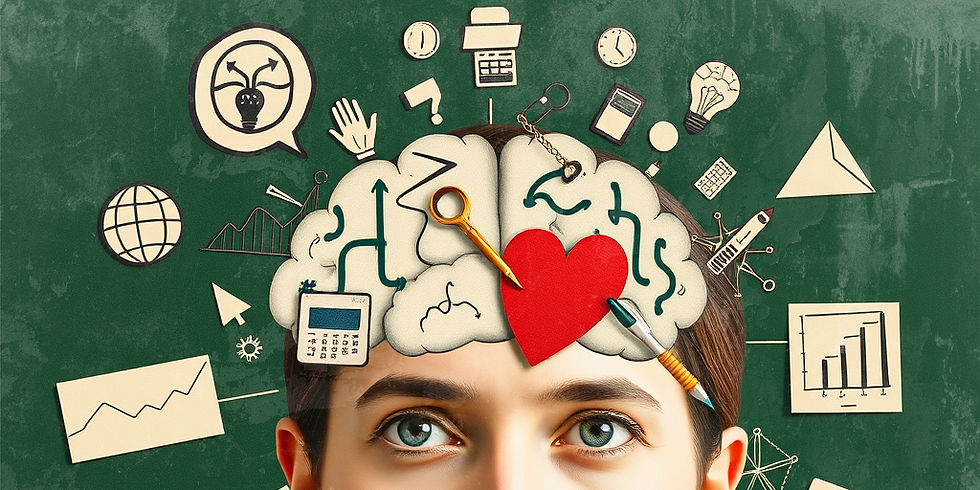
Today, Change Management increasingly focuses on the person experiencing the change. The question “How do we manage the change?” is gradually giving way to another one: “How do we create the conditions in which people can help shape the change?”
And what does change do to us?
Once we shift our focus from the process to the person, a fascinating field opens up. We start asking why it is so difficult for us to change what we know, why one person reacts to a new situation with curiosity while another responds with fear, and why someone can rationally understand the need for change while emotionally resisting it at the same time.
What happens to us when we lose our sense of control, and what helps us regain a sense of agency? People need to feel safe even when we can no longer promise them stability. And that changes the way we communicate change and the way we lead others—without pretending that we can predict the future.
This is where Change Management meets psychology, communication, leadership, organisational culture, and sociology.
More than just getting through it
Engaging with Change Management gives us language and tools to understand change better—and through that, to understand ourselves and our own reactions better too.
It shows us how to lead ourselves through change and how to support others—in a team, in a family, in a relationship, in our neighbourhood, in an association or in any community we are part of.
Don’t just react. Help shape it.
And this is perhaps the most important idea behind Change Management: moving from passive reaction to conscious participation. From asking “What are they doing to us now?” and “How do I survive a world that keeps changing?” to asking: “What can I influence—and what part do I want to play in the direction this world is taking?”
Change Management is about understanding how people function in times of change, how we lead ourselves and others, and how we act when we do not yet have all the answers.
Because change does not have to be something that simply happens to us. It can also become a space for action, growth, and for helping shape the world we want to live and work in.
Do you want to shape change more consciously? Take a look at my open courses (in Berlin, in German) on this and other related topics, or find out more about coaching and training for teams and organisations. Let's talk about what would work best for you.